
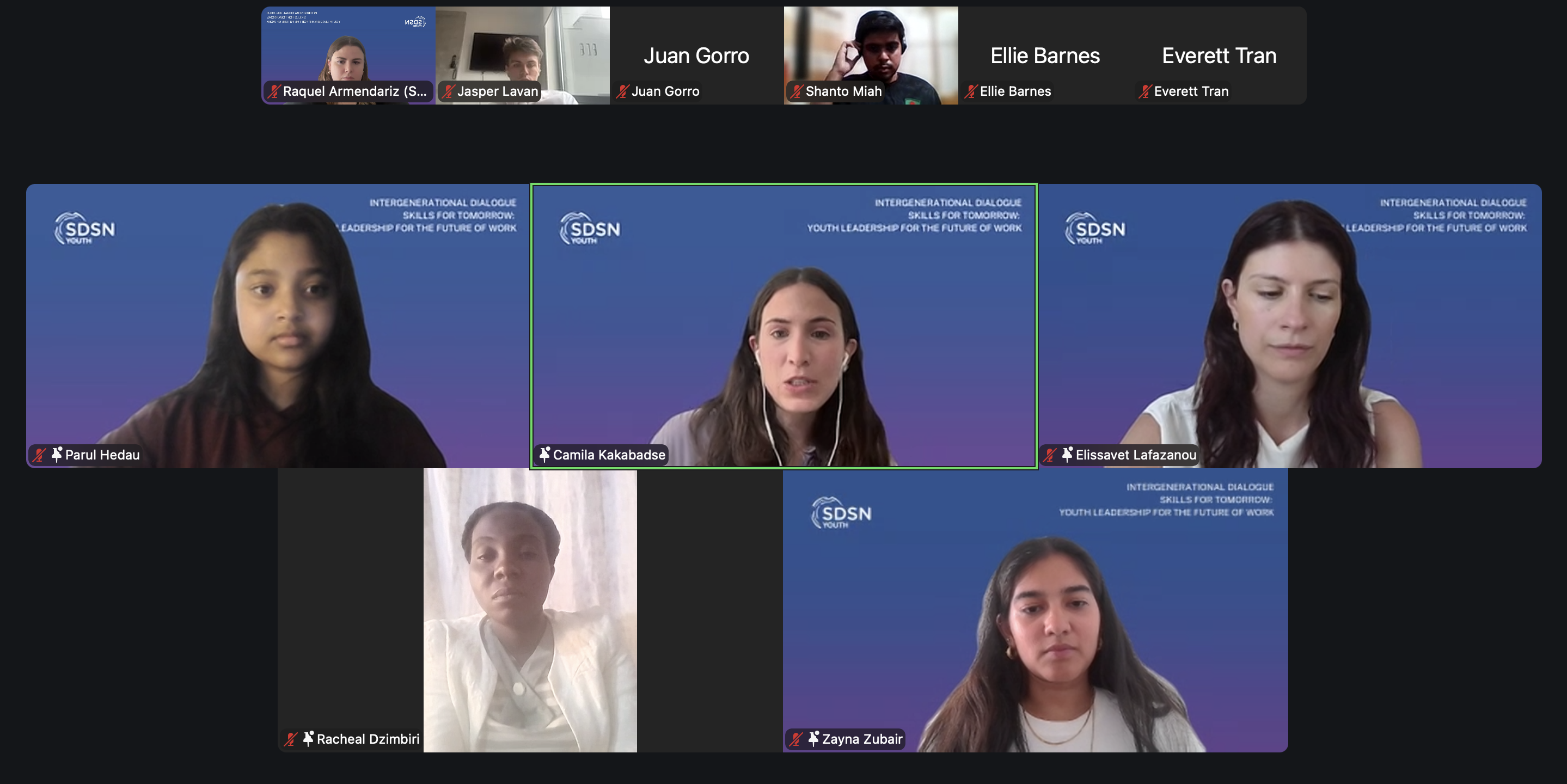
In recognition of International Youth Skills Day celebrated annually on August 12, and International Youth Skills Day, celebrated annually on July 15th, SDSN Youth hosted Skills for Tomorrow: Youth Leadership for the Future of Work, an intergenerational dialogue exploring how young people are shaping the future of work, leadership, and sustainable development.
The conversation brought together four young leaders from different regions:
Moderated by Camila Kakabadse, Events and Partnerships Project Lead at SDSN Youth, the dialogue built on insights from SDSN Youth’s project A Youth Vision of the World’s Future and specifically, the regional consultations on the Future of Work, where hundreds of youth took part to share what works, what doesn’t, and what needs to change on the road to an equitable future.
Across the discussion, speakers reflected on youth leadership, barriers to dignified work, education and lifelong learning, innovative partnerships, and the commitments needed to build a more sustainable, equitable, and inclusive world of work.
Youth Leadership Beyond Representation in the Workplace
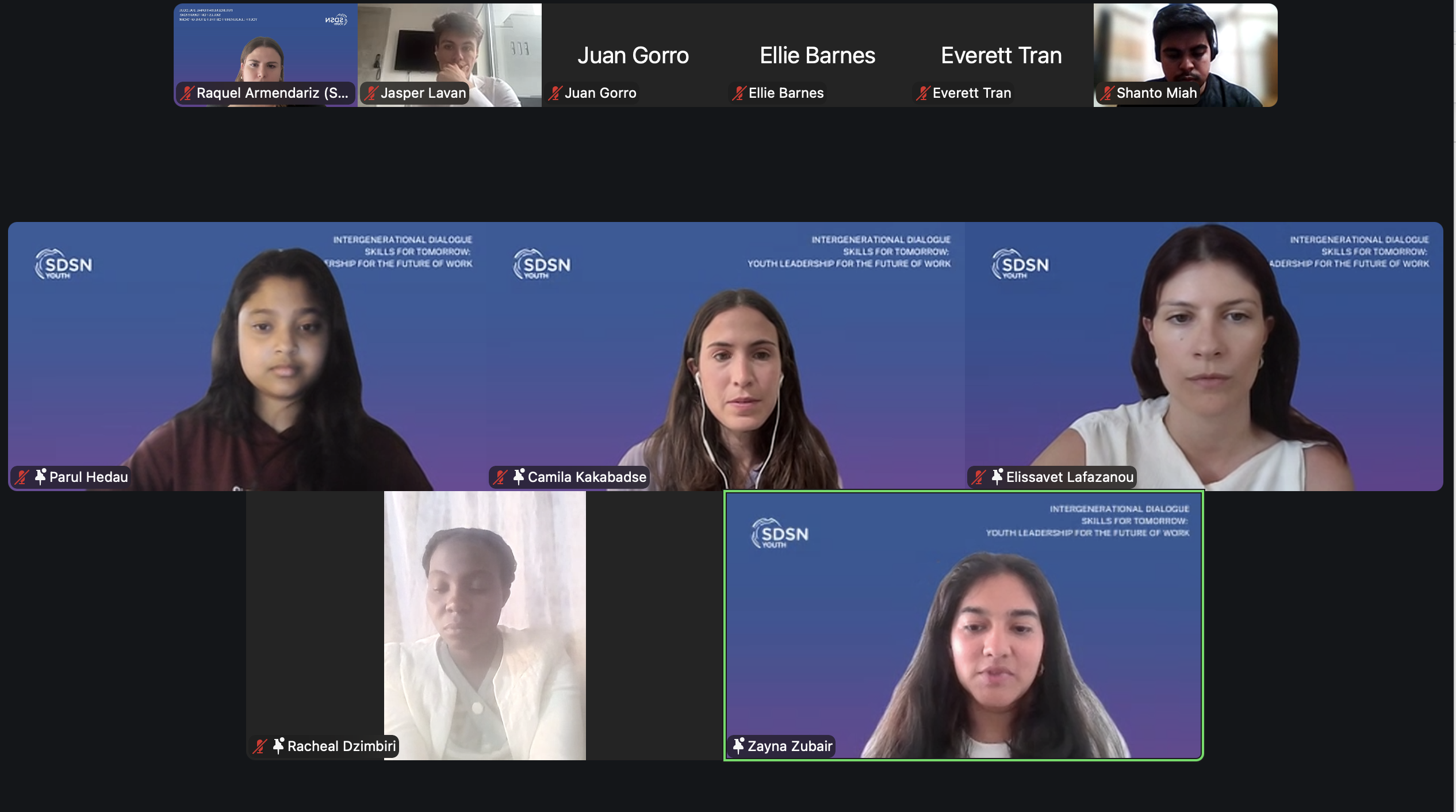
The conversation opened with a reflection on what youth leadership looks like in today’s changing world. For the speakers, youth leadership is not limited to formal positions or titles. It is visible in community work, advocacy, innovation, entrepreneurship, education, and the everyday efforts of young people to create change in their own contexts.
Zayna emphasized that many young people are taking ownership of the work they do, whether through community projects, collaboration with governments, or participation in policy spaces. However, she also pointed out that institutions must move beyond simply saying that young people should be “brought to the table.” The real question is how youth can access those spaces, understand that they belong there, and have the support needed to contribute meaningfully.
Parul built on this by highlighting the importance of meaningful connection. She noted that young people today are full of ideas, passion, and energy, but institutions need to create spaces where youth can actually lead. Youth participation, in this sense, is not just about representation; it is about trust, resources, leadership opportunities, and the ability to shape decisions.
Barriers to Dignified Work and Opportunity
A recurring theme throughout the event was that young people do not lack talent or ambition. Rather, many face systems that do not create the conditions for their potential to flourish.
Racheal brought in a powerful perspective from the African region, identifying poverty, limited access to technology, education-to-employment gaps, and lack of practical training as major barriers. She described how many young people may be educated, but still graduate into a labor market that does not match their training or provide clear entry points. In some cases, students are expected to have years of experience before being considered for opportunities, creating a difficult cycle for those trying to begin their careers.
She also highlighted the importance of digital access from an early age. Without access to smartphones, computers, or the internet, many young people are excluded from educational and professional opportunities before they even enter the workforce.
Elissavet added that the greatest barrier is not a lack of talent among youth, but systems that fail to connect education, employers, and communities. She stressed that young people need real projects, mentorship, and meaningful entry points into the labor market so they can build confidence and experience before beginning their careers.
Learning for an Uncertain Future
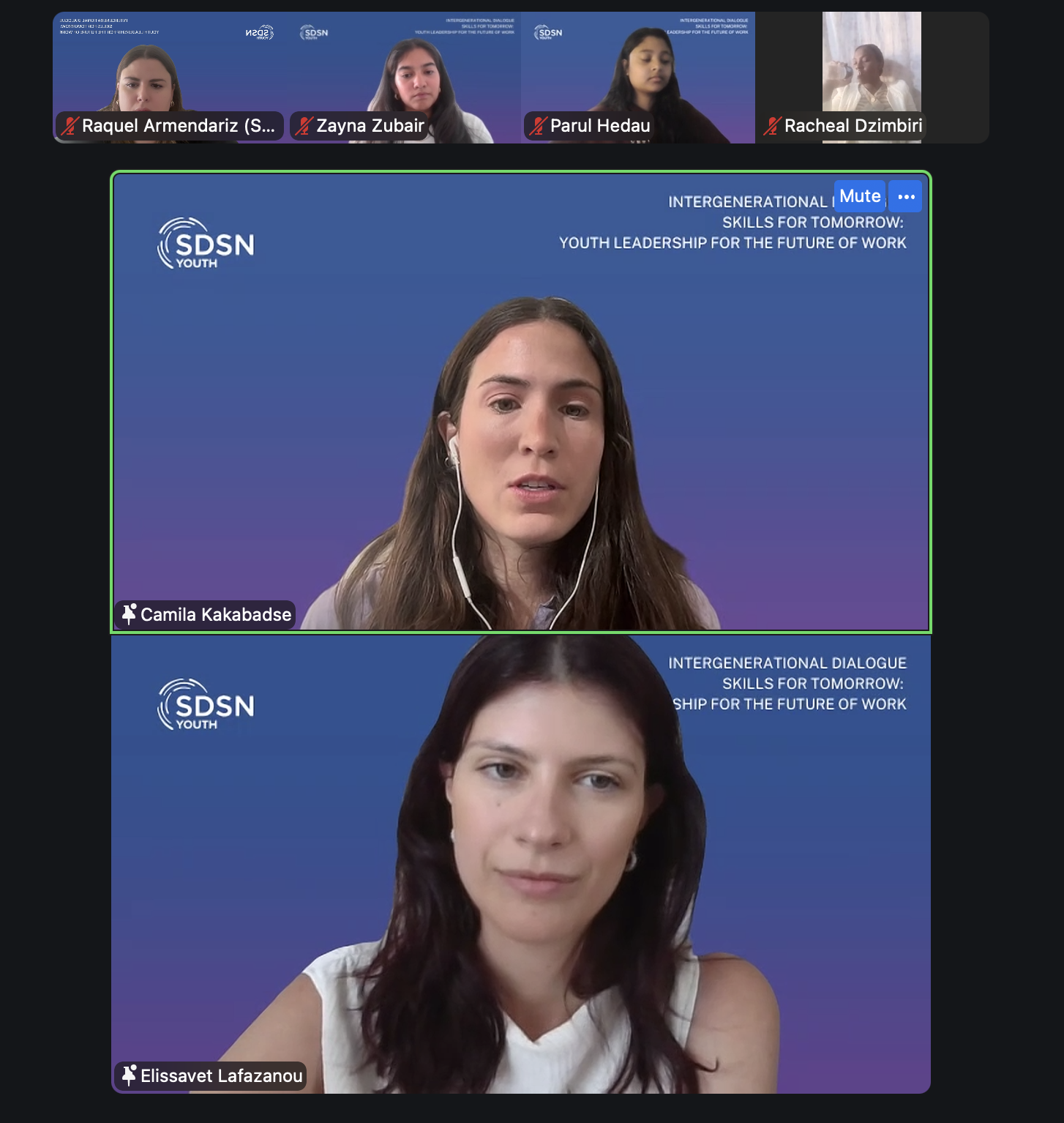
As technology, climate transitions, and labor markets continue to evolve, speakers agreed that education must also change. Preparing young people for the future is no longer about training them for one fixed career path. It is about equipping them to adapt, continue learning, and respond to change throughout their lives.
Zayna emphasized the importance of entrepreneurship, creativity, digital literacy, and accessible education. Drawing from examples in Sri Lanka, she spoke about young people engaging in local innovation, from upcycling materials for the tourism sector to heat mapping in Colombo to better understand the impacts of rising temperatures. For her, education should help young people connect learning to the realities of their communities and normalize “learning while implementing.”
Elissavet echoed this point, arguing that education should prepare people to keep learning. She called for learning models that are more practical, connected to society, and responsive to change. Technical skills, Artificial Intelligence (AI) literacy, and digital skills matter, but so do curiosity, communication, adaptability, ethical judgment, creativity, empathy, and collaboration. In a world shaped by AI, these human capabilities become even more important.
Rather than asking whether we can predict the future of work, Elissavet suggested that the real question is whether we are building education systems that give people the confidence and capacity to adapt to whatever the future brings.
Partnerships, Mentorship, and Co-Creation
The discussion also highlighted that the challenges facing young people cannot be solved by one sector alone. Governments, academia, civil society, private sector actors, communities, financial institutions, and youth networks all have a role to play.
Racheal shared examples of partnerships between governments, civil society, communities, and academic institutions, emphasizing that community voices must guide development efforts. She also pointed to the importance of partnerships that expand access to financial literacy, loans, grants, internships, and practical training. For her, mentorship is key to helping youth navigate education and work pathways.
Parul brought in the concept of citizen science as a model for meaningful collaboration. She described it as a way for communities and citizens, including young people, to participate in collecting data, solving problems, and contributing to sustainable solutions. Her reflection offered a powerful reminder that communities should not be treated only as audiences. Instead, they should be invited to co-author solutions, especially when they are the ones living the challenges being addressed.
Moving Forward
Looking ahead, speakers shared concrete commitments for institutions, stakeholders, and young people. Zayna called for transforming systems to support equal opportunity, accessible education, digital literacy, and intergenerational synergies. Racheal emphasized the need to better match education with industry needs, strengthen entrepreneurship, and create local industries where young people can apply their skills and generate employment within their communities.
Elissavet called on institutions to trust young people, not only by listening to them, but by giving them meaningful opportunities to shape decisions and policies. She also encouraged young people to use those opportunities with purpose, critical thinking, and a commitment to building a future that is inclusive, sustainable, and human-centered.
Parul closed with a reminder that youth should never lose their curiosity: the curiosity to create change, pursue their passions, and lead. She also offered one of the most powerful reflections of the event: we should celebrate youth impact, not only youth potential.
The dialogue made clear that young people are not simply preparing for the future; they are already shaping the present. But for youth leadership to thrive, institutions must invest in access, mentorship, future-ready skills, inclusive education, dignified work, and partnerships that move beyond consultation toward co-creation and shared decision-making. Building the future of work must mean building systems where young people are trusted as leaders, innovators, decision-makers, and partners in sustainable development.
Through conversations like this, SDSN Youth continues to create spaces where youth voices from across regions can inform global discussions and inspire action toward a more just, inclusive, and sustainable future for all.
If you missed this insightful session or would like to revisit the discussion, we invite you to watch the recording. For collaboration opportunities with SDSN Youth, contact youth@unsdsn.org