
.jpeg)
By Evangelia Savvidou, SDSN Youth Global Networks Management Project Officer
At the Thessaloniki Sustainability Summit 2025, young climate leaders delivered a clear message: the next decade must be about implementation, regeneration, and intergenerational unity.
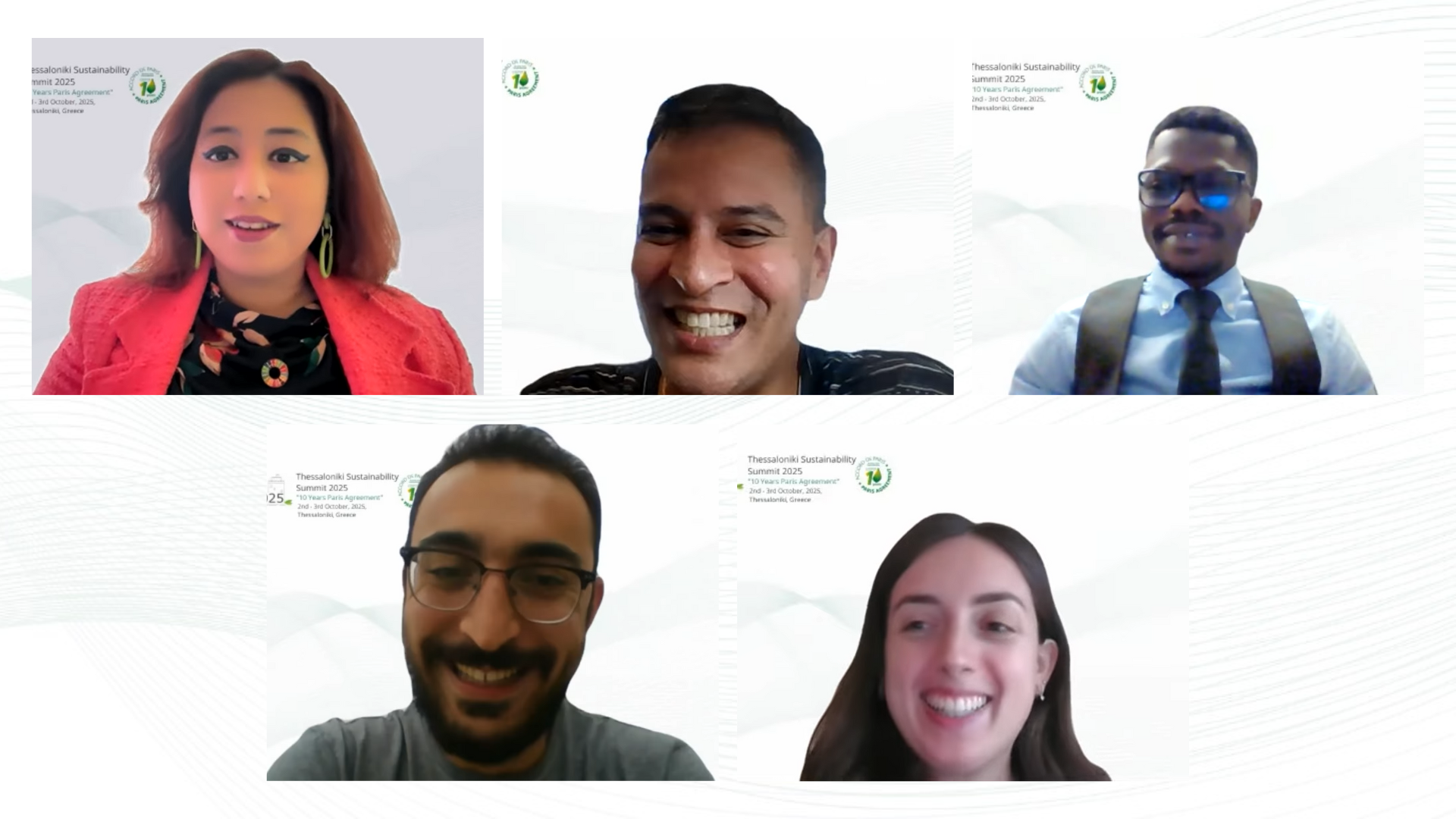
As 2025 marks ten years since the Paris Agreement, the Thessaloniki Sustainability Summit 2025, organized by SDSN Black Sea and in collaboration with the World Academy of Art and Science (WAAS) and SDSN Youth, brought together emerging climate experts and young advocates to explore ‘the role of the young people in the implementation of the Paris Agreement’, assessing progress and gaps and proposing concrete, solutions-driven, and youth-oriented actions for the decade ahead.
Setting the stage: A planet at the edge
Moderating the discussion, Evangelia Savvidou (SDSN Youth Global Networks Manager & SDSN Youth Black Sea Founding Coordinator and WAAS Junior Fellow), framed the urgency of the moment. Seven of the nine planetary boundaries have already exceeded safe operating limits. At the same time, societies face polarization, widespread disinformation, geoeconomic confrontation, and conflicts. Bringing new expertise, lived experience, and innovative ideas, young people have the courage to challenge prevailing norms, influence and accelerate climate and planetary action across communities and sectors, and sustain hope for a livable future.
Two critical questions underpinned the discussion and invited the speakers to reflect on the role of young people as both experts and advocates.
Grassroots action can lead the way
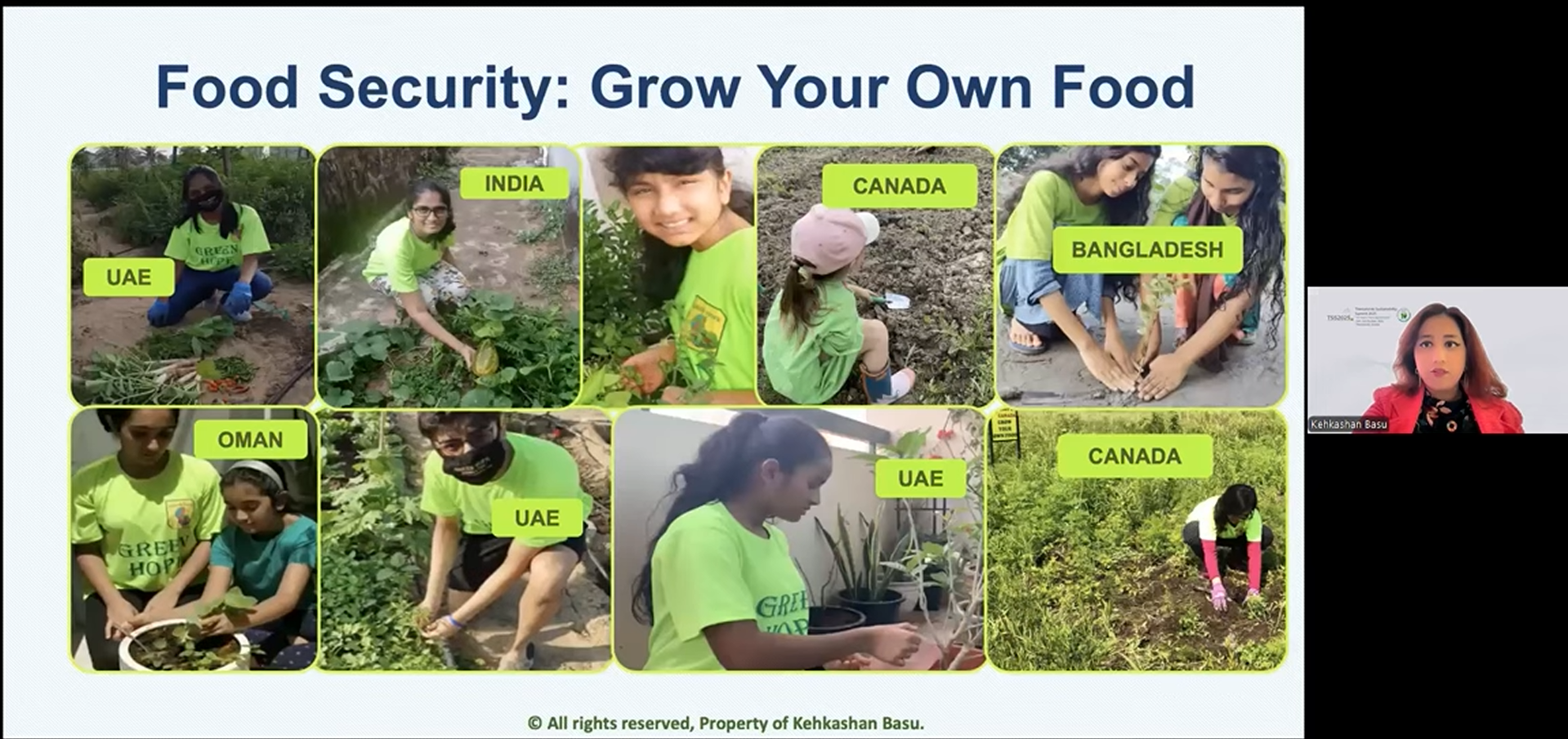
Kehkashan Basu (Environmental and human rights activist; Founder and President, Green Hope Foundation and WAAS Junior Fellow) emphasized the urgent need to shift from pledges to implementation. She underscored the power of grassroots, youth-led solutions that translate climate goals into daily actions and impact. “Young people are transforming promises into practice”, she noted, highlighting that the ability to deliver on the Paris Agreement depends on local responses and local communities leading the way.
All panelists mentioned examples of localized youth-driven actions, including:
Young professionals drive unified solutions
Ash Pachauri (Director and Senior Mentor, Protect our Planet Movement and WAAS Junior Fellow) underscored that young people are not only advocates but also active implementers of climate solutions, shaping policy, community programs, and sustainable practices globally. He reminded us that climate action must address the interconnected crises of human health, equity, and social development goals to ensure sustainable and inclusive outcomes. He called for unity across generations and sectors. Cross-sector partnerships, including those with NGOs, youth networks, and local communities, remain crucial for accelerating the implementation of the Paris Agreement and achieving tangible progress. Art, storytelling, and shared values can build bridges and inspire collective action.
Regeneration and intergenerational collaboration are critical policy and cultural shifts
Ibrahim Yunus (Network Coordinator, Youth Climate Collective, Surge Africa Organisation and WAAS Junior Fellow) offered a balanced reflection. Global renewable energy expansion and a growing just transition movement show meaningful progress, yet emissions remain high, the finance gap persists, and vulnerable communities bear disproportionate burden. He framed the shift from sustainability to regeneration as the decisive point to restore ecosystems, rebuild social trust, and create circular economies. “Regeneration is not optional—it is survival.” He also called for a new intergenerational pact, framing generational unity as the foundation for transformation. Youth do not ask for tokenistic engagement but for accountability and shared responsibility, combining the wisdom of elders and the urgency of youth.
National policy should be bridged with local action
Amer Qawasmi (Deputy Project Lead Local Pathways Fellowship, SDSN Youth and Private Sector Development Advisor, GIZ Jordan) discussed how the Paris Agreement has put climate justice at the center of the agenda, empowering youth to push for fairness and inclusivity in climate action. Yet he noted a major gap: the lack of connection between high-level governmental strategies and the localized implementation efforts led by youth organizations, which often remain siloed, under-recognized, and under-funded, and are treated merely as a "nice-to-have" social responsibility. He argued that looking ahead, the Paris Agreement goals must be integrated into broader economic and development planning to turn climate commitments into system-wide transformation.
Looking ahead: Youth as co-architects of the next decade
The Youth Session at TSS2025 demonstrated that young leaders bring expertise, courage, and a grounded but hopeful vision for the future.
As the world enters the second decade of the Paris Agreement, climate action must be co-created. Young people must move beyond being rhetorically celebrated speakers or symbolic representatives and be recognized as co-negotiators and co-designers of policy and action.
The path forward depends on unity, democracy, regeneration, and the youth leadership already underway in youth communities worldwide.
If you did not attend the event live, you can watch the “Session: The role of the youth branch of the World Academy of Art and Science and SDSN Youth in the implementation of the Paris Agreement” online.
The Thessaloniki Sustainability Summit 2025, organized by SDSN Black Sea, under the auspices of WAAS, was part of the European Sustainable Development Week and the 10 Years Paris Agreement commemorative events. The event’s report with key insights from all sessions and the speakers’ presentations are available on the official event webpage.